ProActive Osteogenic Strength Program
Designed by Dr. Brandon Evans, PT, DPT | Not Physical Therapy | Not Billed to Insurance or Medicare
Build Real Strength. Protect Your Bone Health. Move With Confidence.
Osteopenia and osteoporosis change what "getting stronger" needs to look like — but that doesn't mean you're stuck sitting on the sidelines. The ProActive Osteogenic Strength Program is a clinician-led wellness program built around real weight, real bone-loading, and real impact training — a research-informed way to build strength and support bone density, designed by Dr. Brandon Evans, PT, DPT.
This program works alongside whatever your doctor has already prescribed — it's not a substitute for medical treatment, and it's not physical therapy. It's its own thing: a structured, one-on-one strength program built specifically for adults who want a real plan instead of a worried guess.
Talk to us first — complimentary, no pressure, no obligation.
Prefer to text or email instead? Same number: (502) 512-2165.
What Is Osteopenia, Osteoporosis, and "Bone-Loading" Exercise?
Osteoporosis is a condition where bones lose density and become fragile, increasing fracture risk. Osteopenia is an earlier stage of bone loss, before it reaches osteoporosis. Both are diagnosed through a bone density (DEXA) scan.
Bone-loading exercise — sometimes called osteogenic loading — refers to resistance training and impact activity performed at a level that places real mechanical stress on bone, which is the stimulus bone needs to maintain or build density. Walking or light stretching alone typically doesn't provide enough load to do this; specific resistance and impact training does.
What This Program Is — and What It Isn't
This is:
- A clinician-led wellness program
- Designed by Dr. Brandon Evans, PT, DPT
- Built on real weight, real bone-loading, and real impact training
- Research-informed and individually progressed
- A structured plan — not random workouts
This is not:
- Physical therapy
- Billed to insurance or Medicare
- A fitness class
- A gym membership or "machines" program
- A replacement for medical treatment your doctor has prescribed
Built on Real Loading — Not Guesswork
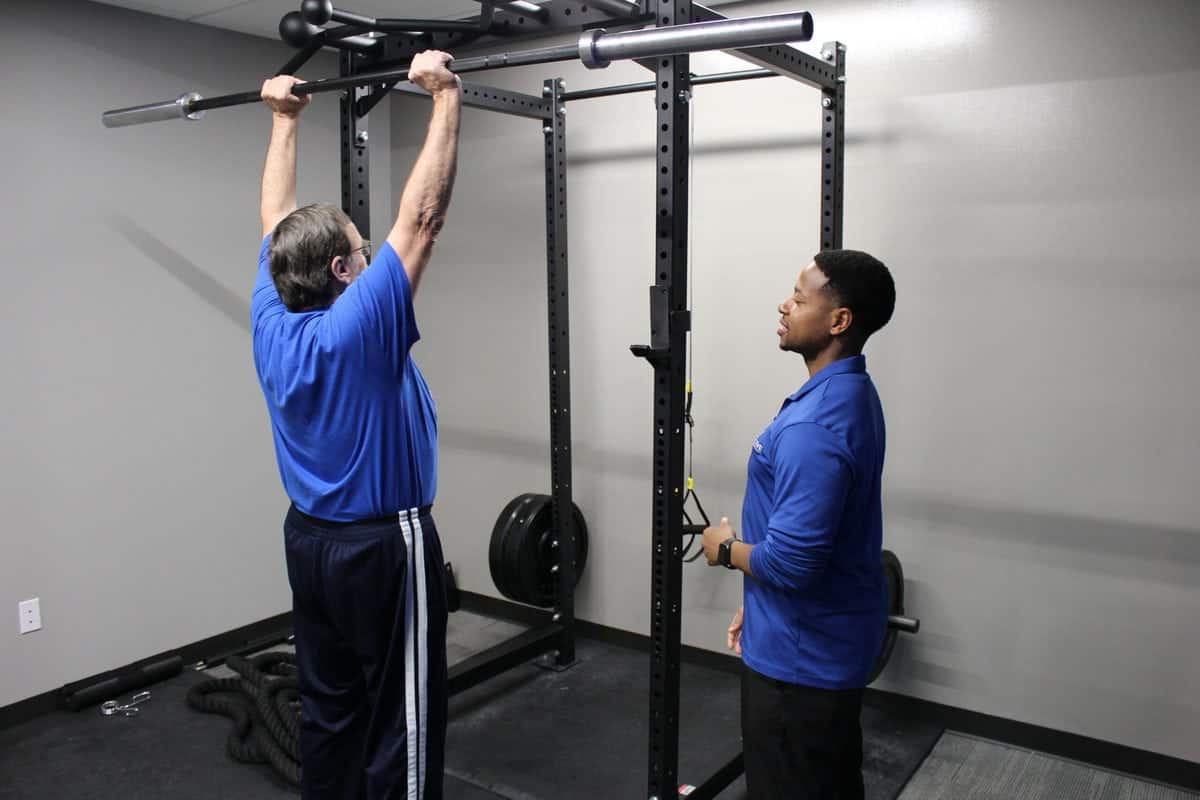
Not all exercise places the right kind of demand on bone. This program uses lifting patterns, loading, and — when appropriate — impact work (heel drops, low hops, stair work) because that combination is what a research-informed approach to bone density actually requires. Sessions are guided one-on-one and personally designed by Dr. Brandon Evans, PT, DPT, so the plan matches your body, your history, and your pace.
Research supports progressive resistance training as an important component of improving and preserving bone health. Our program emphasizes carefully supervised free-weight and functional exercises similar to those used in leading osteoporosis research, allowing us to progressively load the bones while improving strength, balance, and confidence in everyday movement.
Source: Watson SL, Weeks BK, Weis LJ, Harding AT, Horan SA, Beck BR. High-intensity resistance and impact training improves bone mineral density and physical function in postmenopausal women with osteopenia and osteoporosis: The LIFTMOR randomized controlled trial. J Bone Miner Res. 2018;33(2):211–220.
This complements the treatment your doctor has already prescribed. We never suggest stopping or changing medication — that decision is always between you and your physician. As strength and bone density improve over time, some patients do revisit their medication plan with their doctor; that's a conversation for you and your physician to have, not something this program directs.
Why This Matters
This isn't just about a number on a bone density scan. It's about longevity, prosperity, and peace of mind — staying strong enough to keep doing the things that matter, on your own terms, for years to come.
One important distinction: building bone density reduces fracture risk and the severity of a fracture if a fall happens — it does not, by itself, prevent falls. Falls are a separate issue of balance and strength. If balance or dizziness is part of your concern, pair this program with our Balance & Dizziness Physical Therapy services.
This combined approach — progressive resistance training for bone density, paired with balance-focused care when needed — reflects the Too Fit to Fracture international consensus guidelines for exercise in people with osteoporosis.
How the Program Works
Phase 1 is a 4-month foundation: 2 sessions per week, one-on-one, with structured checkpoints along the way. Phase 2 continues from there, progressing your strength and bone-loading work over the long term.
Before You Ever Lift: A Doctor of Physical Therapy-Led Assessment
Every program starts with a readiness assessment led by a Doctor of Physical Therapy — not a generic intake form. We evaluate your balance, movement quality, and confidence with loading, and use that to set your personalized starting point. Your first sessions are calibrated to exactly where your body is on day one, not a one-size-fits-all template.
Month 1 — Build the Foundation
Learning proper form, building confidence, and getting your body used to safe bone-loading exercise. The goal isn't to do as much as possible — it's to move well and prepare for what's next.
Month 2 — Increase Strength Safely
With the foundation set, resistance gradually increases. Exercises begin to feel more strength-focused, while staying controlled and individualized.
Month 3 — Stronger Bone-Loading Progression
More emphasis on heavier resistance and more meaningful loading. For the right person, this phase may include more advanced impact work.
Month 4 — Reinforce & Build Long-Term Confidence
Solidifying gains in strength and movement confidence, and preparing you to move into Phase 2.
What Happens After Phase 1?
Phase 1 builds the foundation. Phase 2 continues from there — progressing your strength and bone-loading work over the long term, rather than leaving you to figure out what's next on your own. As you and Dr. Evans see how your body responds, your program continues to evolve with you.
Example Exercises You May See in the Program
- Squat variations
- Trap bar deadlifts or hinge patterns
- Step-ups or lunges
- Overhead or landmine presses
- Rows and loaded carries
- Heel drops, low hops, stair work, or similar impact drills, when appropriate
- Posture and upper-back strengthening drills
Who This Program Is For
- Adults with osteopenia or osteoporosis who want to build strength safely
- People who want guided, structured strength training instead of guessing on their own
- Anyone who wants a real plan — not a random workout routine
- People who've finished physical therapy and want a next step to keep building strength and bone health long-term
When Physical Therapy Should Come First
This is a wellness program, not physical therapy, and it's built for people who are ready for supervised strength training. If you're dealing with significant pain, dizziness, gait instability, a true balance disorder, or another active medical concern, physical therapy may need to come first. Talk to us and we'll help you figure out the right starting point.
Are You a Cancer Survivor?
Chemotherapy, radiation, hormone therapy, and long-term steroid use can accelerate bone loss — even years later. We help cancer survivors in Louisville rebuild strength and confidence with a program built around their history. Call or text us to talk through post-cancer bone health.
Why ProActive
- Every plan is personally designed — never one-size-fits-all
- Guided one-on-one, with progress tracked at structured checkpoints
- Designed by Dr. Brandon Evans, PT, DPT — grounded in clinical experience, not generic fitness programming
Led by Dr. Brandon Evans, PT, DPT
Founder, ProActive Physical Therapy and Wellness. Designed the Osteogenic Strength Program.
[Note: expand with real bio copy and a headshot — placeholder for now.]
Visit Our Louisville Clinic
Serving Lyndon, St. Matthews, Hurstbourne, and the greater Louisville, KY area.
Frequently Asked Questions
What is an osteogenic strength program?
An osteogenic strength program is a structured exercise program that uses resistance training and, when appropriate, impact activity to place mechanical load on bone — the stimulus research shows bone needs to maintain or build density. The ProActive Osteogenic Strength Program is a clinician-led version of this, designed by Dr. Brandon Evans, PT, DPT.
Does exercise actually help with osteoporosis or osteopenia?
Yes — supervised, progressive resistance and impact training has been shown to improve bone mineral density and physical function in adults with low bone mass. The best-known clinical trial in this area, LIFTMOR (Watson et al., 2018), found meaningful improvements in spine and hip bone density using this kind of training, compared with a low-intensity home exercise program. Not all exercise provides this stimulus equally; walking and light stretching alone typically don't load bone enough to make a meaningful difference.
Is this the same as physical therapy?
No. This is a clinician-led wellness program, designed by Dr. Brandon Evans, PT, DPT. It isn't billed to insurance or Medicare, and it isn't a substitute for physical therapy or the treatment your doctor has prescribed. If you have significant pain, dizziness, or a balance disorder, physical therapy may need to come first.
Is this the same as personal training or a gym membership?
No. This program is clinically designed and guided by a Doctor of Physical Therapy around your specific bone health history, not a generic workout plan or open gym access. It's a structured, progressive program with defined checkpoints, not drop-in training.
Do I need to be assessed before I start lifting?
Yes. Every client goes through a readiness assessment led by a Doctor of Physical Therapy before any loading begins. It evaluates your balance, movement quality, and confidence, and is used to set a safe, personalized starting point rather than putting everyone through the same program on day one.
Will this prevent falls?
Building bone density reduces fracture risk and severity — it doesn't directly prevent falls, which come down to balance and strength. If balance or dizziness is a concern, we'll help you get the right support, including our Balance & Dizziness Physical Therapy services if needed.
What if I have pain, dizziness, or balance problems?
Physical therapy may need to come first. Talk to us and we'll help you figure out the right starting point for you.
What happens after the 4-month program?
Phase 1 is the 4-month foundation. Phase 2 continues from there, progressing your strength and bone-loading work over the long term as your body responds — you're not left to figure out what's next on your own.
Will this help me get off my bone health medication?
We never suggest stopping or changing medication — that's always a decision between you and your physician. As strength and bone density improve over time, some patients do revisit their medication plan with their doctor, but that conversation is theirs to have, not something this program directs.
What does the program cost?
We keep pricing details for your complimentary call, since every plan is built around your specific goals and history. Call or text us at (502) 512-2165 and we'll walk you through it — no pressure, no obligation.
How do I get started?
Call or text us at (502) 512-2165, or email info@proactiveptlou.com. We'll talk through your history, answer your questions, and figure out together whether this program is the right fit.
Talk to us first — complimentary, no pressure, no obligation.
Prefer to text or email instead? Same number: (502) 512-2165.
Sources
Watson SL, Weeks BK, Weis LJ, Harding AT, Horan SA, Beck BR. High-intensity resistance and impact training improves bone mineral density and physical function in postmenopausal women with osteopenia and osteoporosis: The LIFTMOR randomized controlled trial. J Bone Miner Res. 2018;33(2):211–220.
Beck BR, et al. Exercise and Sports Science Australia (ESSA) position statement on exercise prescription for the prevention and management of osteoporosis — "Too Fit to Fracture" international consensus recommendations for exercise in osteoporosis.
