Red Light and Near-Infrared Light Therapy in Louisville, KY
Clinical Approach Designed by Dr. Brandon Evans, PT, DPT | Not Physical Therapy | Not Billed to Insurance or Medicare
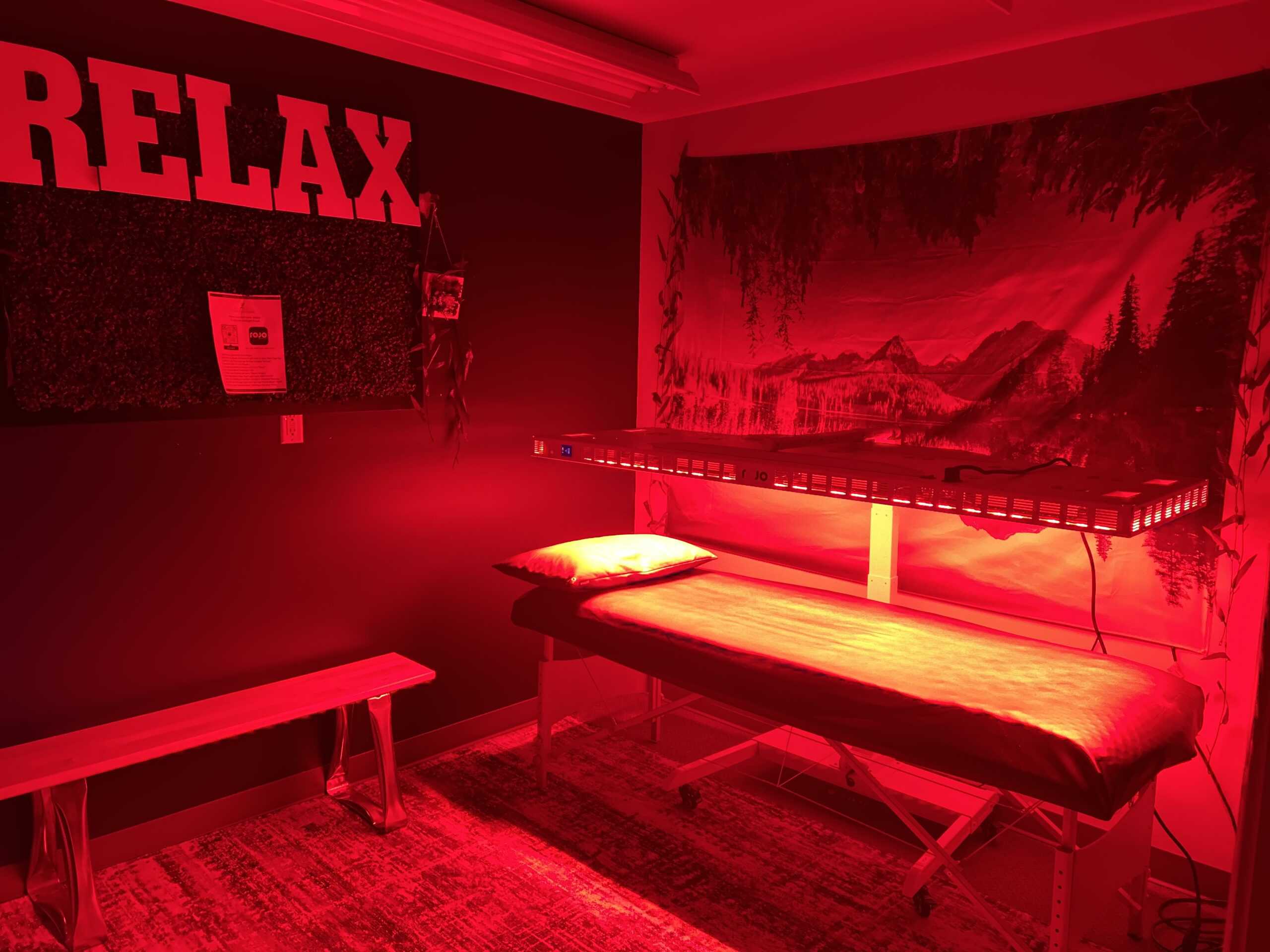
Clinician-Guided Red Light and Near-Infrared Therapy on the ROJO Full-Body System
Red light and near-infrared light therapy — also called photobiomodulation — use specific wavelengths of light to support the body's own repair processes at a cellular level. At ProActive Physical Therapy and Wellness, sessions are delivered on the ROJO full-body red light and near-infrared system, with treatment settings guided by our clinical team rather than a one-size-fits-all preset.
This is a wellness and recovery modality, not physical therapy. It's often used alongside PT, the Osteogenic Strength Program, or on its own as a stand-alone recovery tool for pain, inflammation, and muscle recovery.
Talk to us first — complimentary, no pressure, no obligation.
Prefer to text or email instead? Same number: (502) 512-2165.
What Is Red Light Therapy and Near-Infrared Light Therapy?
Red light therapy uses visible red wavelengths, generally in the 620 to 700 nanometer (nm) range, to reach the skin's surface and superficial tissue. Near-infrared (NIR) light therapy uses longer wavelengths, roughly 700 to 1100 nm, which are invisible to the eye but penetrate deeper — reaching muscle, joint, and connective tissue.
Both fall under the broader term photobiomodulation: light energy absorbed by mitochondria inside cells, where it's believed to support ATP (cellular energy) production and influence inflammation and tissue repair processes. This is the mechanism most current research points to as the basis for red light and near-infrared therapy's clinical effects.
What This Is — and What It Isn't
This is:
- A clinician-guided recovery and wellness modality
- Delivered on the ROJO full-body red light and near-infrared system
- Set to research-informed wavelengths and treatment protocols for your specific goal
- Usable on its own, or alongside PT or the Osteogenic Strength Program
This is not:
- Physical therapy
- Billed to insurance or Medicare
- A tanning bed or a generic spa light room
- A replacement for medical treatment your doctor has prescribed
- A guarantee of a specific outcome
Why We Use the ROJO Full-Body System
Not all red light and near-infrared devices are built the same way, and the difference matters for what you actually get out of a session. We chose ROJO's full-body panel over a smaller handheld unit or a generic single-setting spa panel for a few specific reasons:
- Independently adjustable wavelengths. The ROJO system delivers five clinically relevant wavelengths — 630nm and 660nm red, plus 810nm, 830nm, and 850nm near-infrared — and each one can be adjusted independently, rather than firing a single fixed wavelength at every patient regardless of what's being treated.
- Condition-based smart mode protocols. ROJO's system includes built-in smart modes designed around photobiomodulation research, each pairing a specific wavelength combination, intensity, session length, and treatment distance to a particular goal — acute pain, chronic inflammation, muscle recovery, or skin and tissue repair — instead of one generic setting used for every visit.
- True full-body coverage. The panel treats a full body area in one session, rather than requiring a handheld device to be moved spot to spot, which matters for consistency and total treatment time.
- Clinically meaningful output. Photobiomodulation research is dose-dependent — the light has to be delivered at a strong enough intensity to produce the studied effect. ROJO's high-output LED design is built to deliver that dose rather than an underpowered consumer setting.
- Low EMF and flicker-free design. The system is built with EMF-cancelling technology and flicker-free drivers, and is independently tested and certified.
Your session settings are chosen by our clinical team based on what you're being treated for, not a setting you guess at on your own.
What the Research Says
Photobiomodulation is one of the more heavily studied recovery modalities in musculoskeletal care. The proposed mechanism centers on cytochrome c oxidase, an enzyme in cell mitochondria that absorbs red and near-infrared light, which is thought to increase ATP production and influence inflammatory signaling and oxidative stress.
A 2026 systematic review combining 53 clinical trials (roughly 2,800 patients) found that photobiomodulation therapy reduced pain scores by an average of 32% in knee osteoarthritis, tendinopathy, low back pain, and postoperative pain compared with sham treatment, with function scores improving 18 to 25%. Used alongside exercise, it improved strength outcomes by 25% and reduced delayed-onset muscle soreness by 30%, with no serious adverse events reported across the pooled studies.
A separate systematic review and meta-analysis focused specifically on tendinopathy found that low-level red and near-infrared photobiomodulation had a positive effect on pain and function when used as an adjunct to standard care such as exercise therapy.
Full source citations are listed below.
This is a recovery and wellness tool, not a substitute for medical treatment. We never suggest stopping or changing a prescribed treatment plan — that decision is always between you and your physician.
Who This Is For
- Adults managing joint, muscle, or tendon pain who want a research-informed recovery tool
- Anyone recovering from a workout, an activity flare-up, or a minor soft-tissue injury
- Patients pairing recovery modalities with an active PT plan or the Osteogenic Strength Program
- Anyone who wants a clinically guided session instead of a generic spa setting
When Physical Therapy Should Come First
This is a wellness and recovery modality, not physical therapy. If you're dealing with significant pain, a recent injury, or an undiagnosed symptom, physical therapy may need to come first. Talk to us and we'll help you figure out the right starting point.
Often Paired With
Many patients use red light and near-infrared sessions alongside our PEMF therapy, our shockwave therapy, or the Osteogenic Strength Program, as part of a broader recovery and strength plan. We'll help you figure out which combination, if any, fits your goals.
Why ProActive
- Session settings are chosen by our clinical team, based on what you're being treated for, never a generic default
- Delivered on the ROJO full-body system, with independently adjustable, research-based wavelengths
- Clinical approach designed by Dr. Brandon Evans, PT, DPT, grounded in evaluation, not generic spa protocols
Visit Our Louisville Clinic
Serving Lyndon, St. Matthews, Hurstbourne, and the greater Louisville, KY area.
Frequently Asked Questions
What is the difference between red light therapy and near-infrared light therapy?
Red light therapy uses visible wavelengths, generally 620 to 700 nm, which reach the skin's surface and superficial tissue. Near-infrared light therapy uses longer wavelengths, roughly 700 to 1100 nm, which penetrate deeper to reach muscle, joint, and connective tissue. Many sessions, including ours, use both together.
Does red light and near-infrared therapy actually work?
Research on photobiomodulation, the broader term for red light and near-infrared therapy, has grown substantially. A 2026 systematic review of 53 clinical trials found meaningful pain reduction and functional improvement in conditions including knee osteoarthritis, tendinopathy, and low back pain when used as an adjunct to standard care. As with any therapy, individual results vary.
How is ROJO different from other red light machines?
ROJO's full-body panel allows each of its five wavelengths to be adjusted independently, and includes built-in smart mode protocols matched to specific goals such as pain, inflammation, or muscle recovery, rather than a single fixed setting used for every session. Our clinical team sets your protocol based on what you're being treated for.
Is this the same as physical therapy?
No. This is a wellness and recovery modality, not physical therapy, and it isn't billed to insurance or Medicare. If you have significant pain, a recent injury, or an undiagnosed symptom, physical therapy may need to come first.
What conditions is this typically used for?
Patients commonly use red light and near-infrared sessions for joint and muscle pain, tendon issues, general inflammation, and post-exercise or post-activity recovery, often alongside an active PT plan or the Osteogenic Strength Program.
Is it safe?
The ROJO system is built with low-EMF, flicker-free technology and is independently tested and certified. As with any therapy, tell us about any medications, skin conditions, or medical history that could affect your session so we can guide you appropriately.
How long is a session, and how often should I come in?
Session length and frequency depend on what you're being treated for and which ROJO smart mode protocol fits your goal. We'll walk you through a recommended plan during your complimentary call or first visit.
Is this covered by insurance or Medicare?
No. This is a wellness service and is not billed to insurance or Medicare.
How do I get started?
Call or text us at (502) 512-2165, or email info@proactiveptlou.com. We'll talk through your goals and figure out together whether this is the right fit, on its own or paired with another service.
Talk to us first — complimentary, no pressure, no obligation.
Prefer to text or email instead? Same number: (502) 512-2165.
Sources
Hamblin MR. Mechanisms and applications of the anti-inflammatory effects of photobiomodulation. AIMS Biophys. 2017;4(3):337–361.
Tamimi ZJM. Photobiomodulation therapy in musculoskeletal rehabilitation, mechanisms, clinical evidence, and integrated protocols: a systematic review. Sport Sci Health. 2026;22(2):115.
Apostolopoulos V, et al. The effect of low-level red and near-infrared photobiomodulation on pain and function in tendinopathy: a systematic review and meta-analysis of randomized control trials. BMC Sports Sci Med Rehabil. 2021;13:91.
